Climb Kilimanjaro the right way.
Every year, over 30,000 people just like you come to Tanzania to climb the world’s tallest free-standing mountain and Africa’s highest peak. They come with different backgrounds, fitness levels, and outdoor experience. But the key to their success on Kilimanjaro is the same: proper preparation, experienced leadership, and a team that understands the mountain.
That’s where we come in.
WHY CLIMB WITH ULTIMATE KILIMANJARO®?
Climbing Mount Kilimanjaro does not require technical skills or mountaineering ability. That does not make it a simple undertaking. High altitude, unpredictable weather, logistics, and real-time decision making present real challenges.
For 20 years, Ultimate Kilimanjaro® has built disciplined systems that prioritize safety and professionalism, setting the standard for how Kilimanjaro climbs are conducted.
EXPERT GUIDES
- Hand selected, licensed local guides
- Decades of leadership experience
- Certified Wilderness First Responders
- Medical and safety decision authority
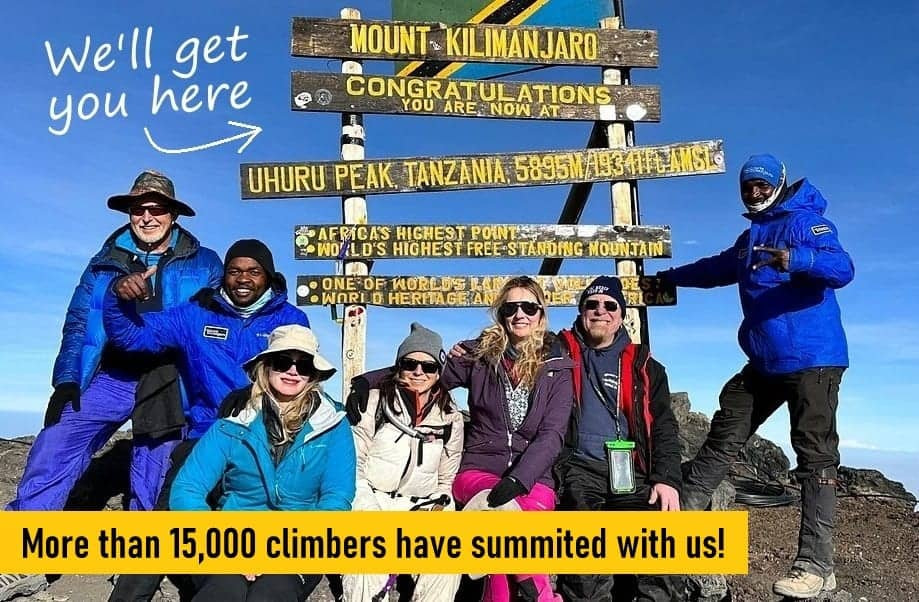
- Over 15,000 clients led to the summit
HIGH QUALITY STANDARDS
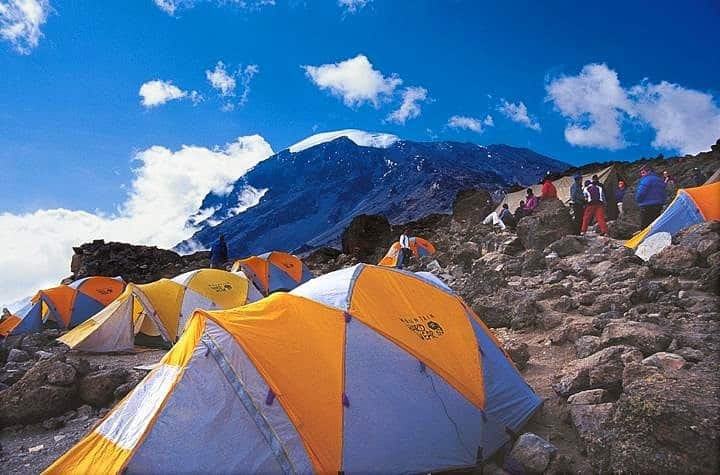
- Rugged, 4-season Mountain Hardwear tents
- Warm Mountain Hardwear sleeping bags
- Hot meals from fresh, local ingredients
- Clean water treated with WaterGuard
- Private toilet tent on all climbs
SAFETY FOCUSED
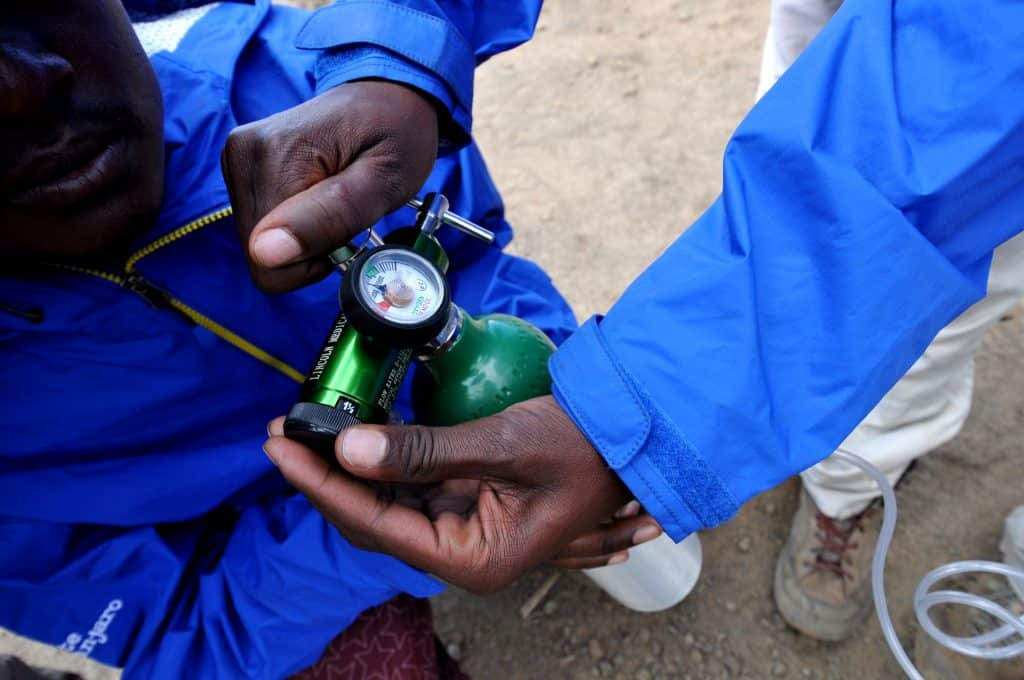
- Trained in first aid & mountain rescue
- Twice daily health checks
- Oxygen saturation & heart rate monitoring
- Emergency oxygen carried on all routes
- Helicopter evacuation
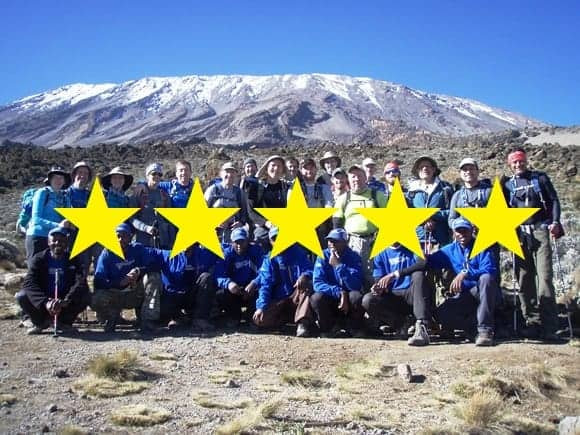
HAPPY CUSTOMERS
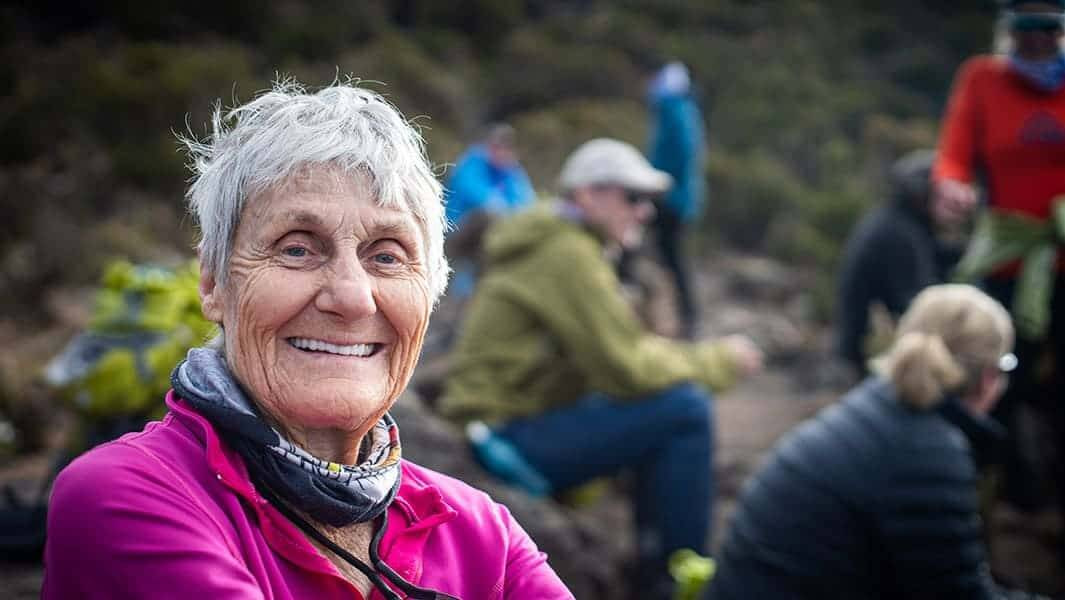
- 89 year old Guinness World Record holder
- Celebrities, television hosts & producers
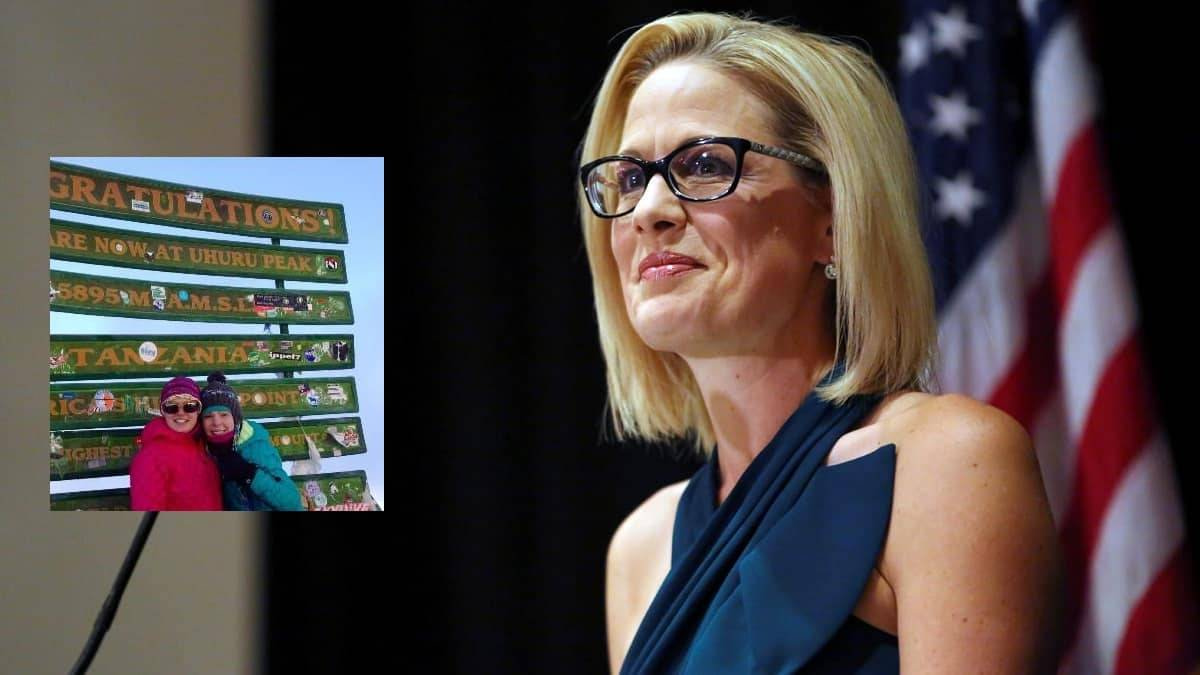
- US Senator, US Ambassador & Lt. Governor
- Filmmakers, authors & journalists
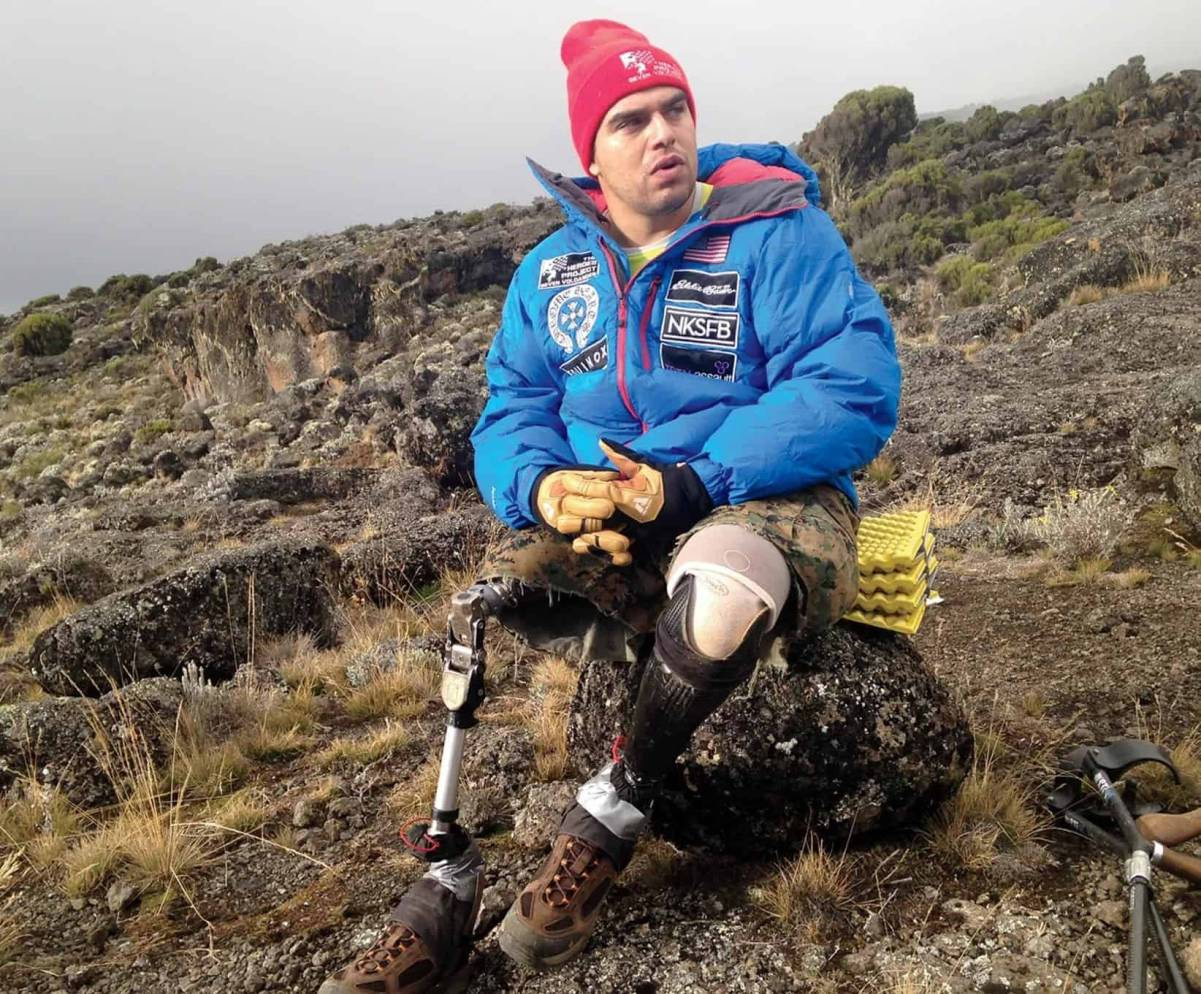
- Disabled veteran with two prosthetic legs

HIGHLY REGARDED
- U.S. and international news outlets
- Print, television and digital media
- Best selling books
- Award winning films and documentaries
- and more…
FREE GUIDE BOOK
Our free guidebook is an introduction to climbing Mount Kilimanjaro. Download it now to see what to expect when you climb with Ultimate Kilimanjaro®.
OUR FAVORITE ROUTES
There are seven established routes on Mount Kilimanjaro. We specialize in those with the most favorable combination of high success rates, excellent scenery, and low foot traffic. These are the attributes that our clients find to be the most important for the best experience.
wHAT’S IT LIKE TO CLIMB KILIMANJARO?
Whether you’re a complete beginner or an experienced mountaineer, our team be there every step of the way to help you along. We provide everything you need to succeed. Watch the videos below to see how we guide clients on the Roof of Africa.
Conquering Kilimanjaro

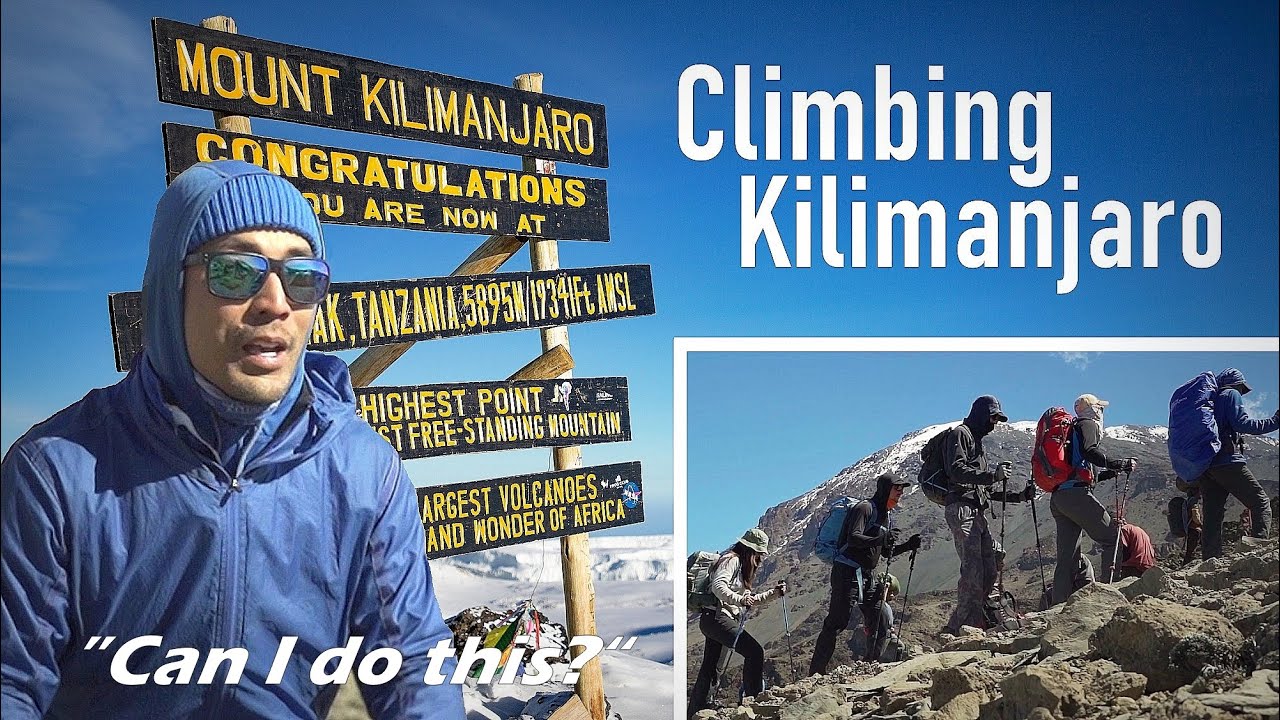
Climbing Kilimanjaro
WHY I STARTED ULTIMATE KILIMANJARO®
“When I climbed Kilimanjaro in 2006, it changed my life. I was inspired to help others do the same. But honest information was hard to find, safety precautions were lacking, and too many climbs were run like a cheap package tour. So I set out to build a more professional, safer-focused operation at a fair price.”
Watch the video below to hear the full story.

OUR MOST FAMOUS CLIMBS
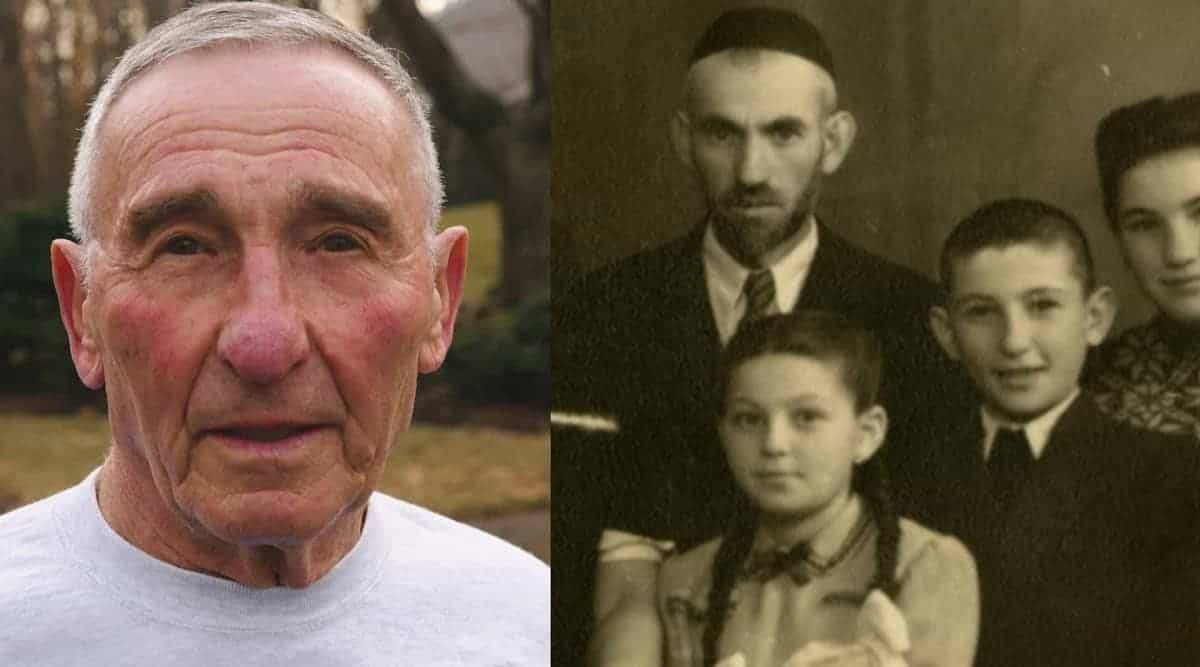
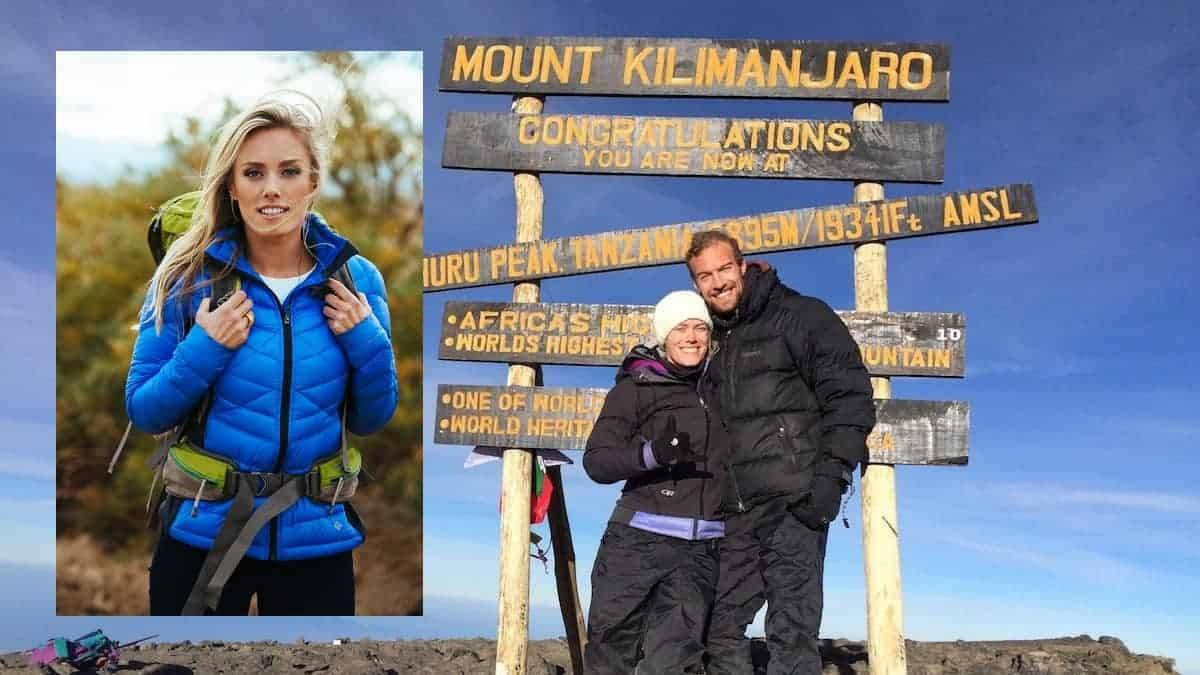
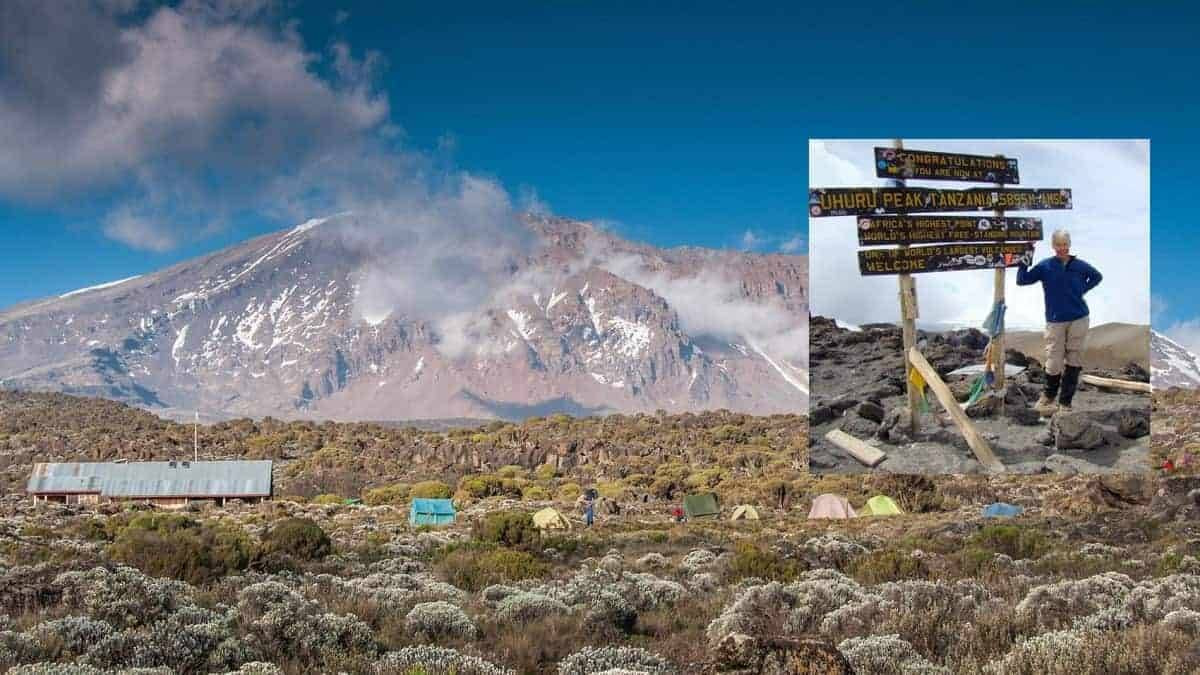
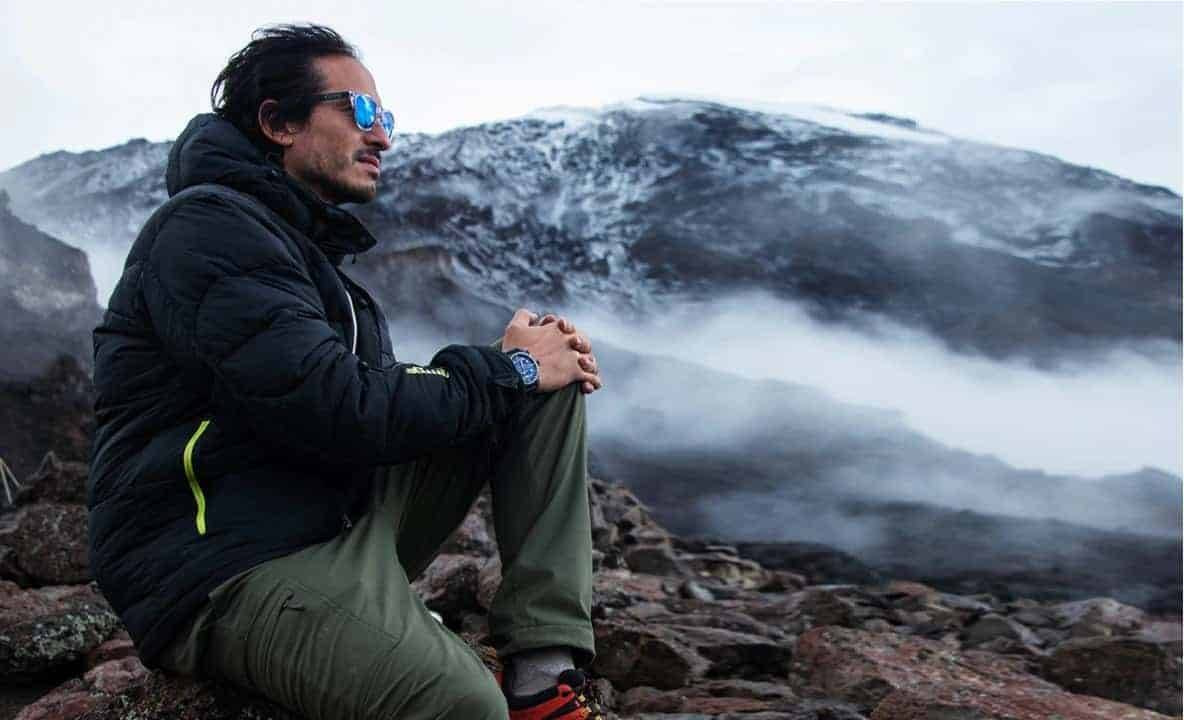
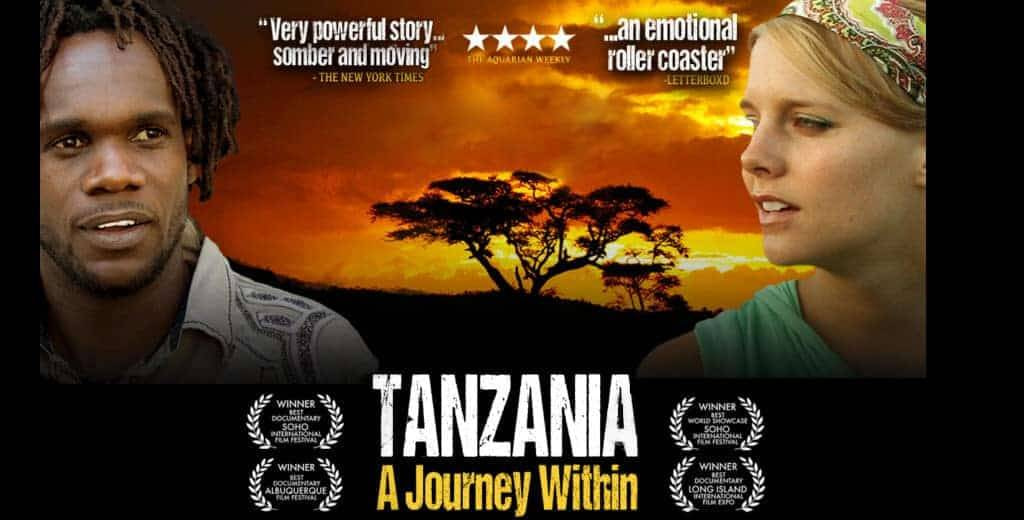
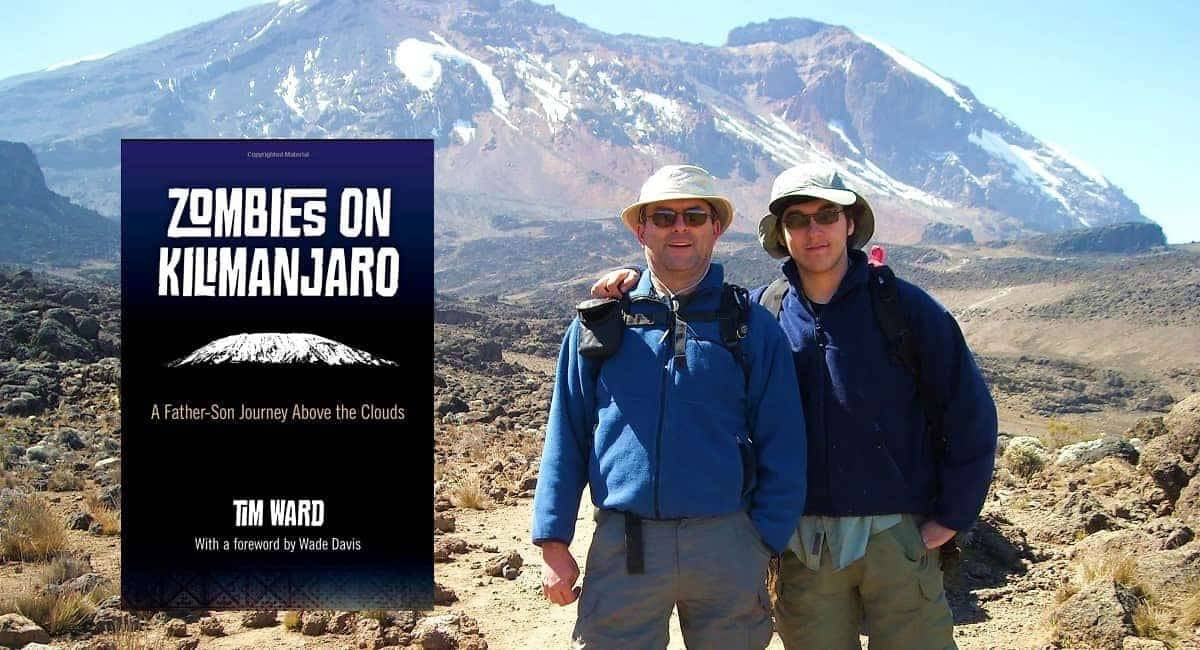
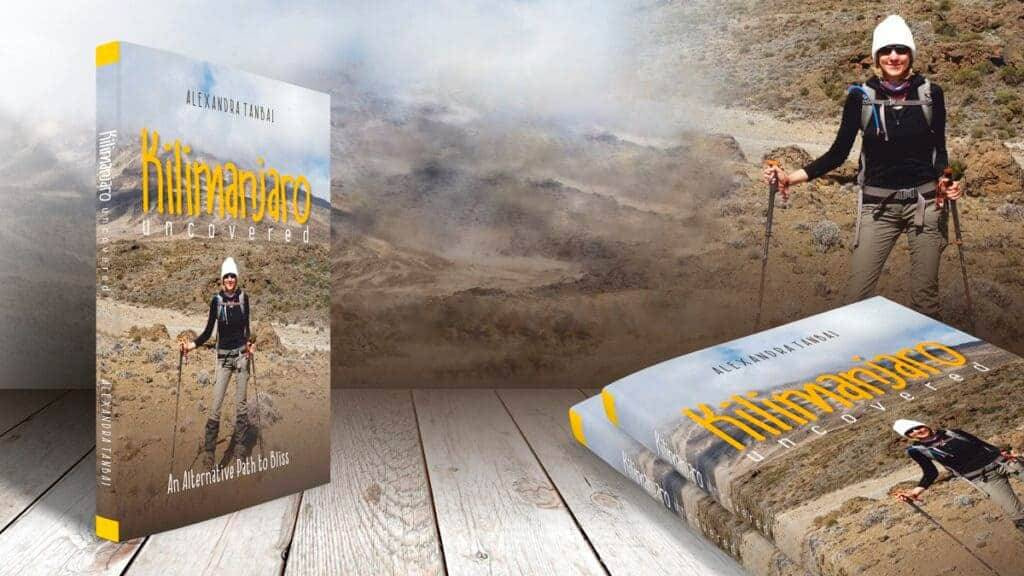
Ultimate Kilimanjaro® has a proven expertise on Mount Kilimanjaro. More than 15,000 clients have stood on the summit with us. Our clients have included celebrities, film makers, senators, ambassadors, authors and journalists.



HOW TO CLIMB KILIMANJARO
1. How do I choose a good Kilimanjaro tour operator?
There are hundreds of companies who service the mountain, but only a handful can be considered reputable. Look for an established company with experienced and competent guides who practice high safety standards. Look for a tour operator that has proven expertise, successfully serving a wide range of clients spanning many years. Ultimate Kilimanjaro® has guided more than 15,000 clients to the summit since we began 20 years ago. We are the Kilimanjaro specialists. And we’re still going strong. read more>>
2. How much does it cost to climb Kilimanjaro?
Do not select a company strictly based on price! Price should be only one component in your overall decision. Prices vary significantly between operators, however high prices and low prices should both be viewed with caution. Ultimate Kilimanjaro® offers high quality climbs at reasonable rates. At our price levels, we can satisfy all park fees, pay real wages to staff, supply good food and equipment, while still providing great service to our clients, equal or better than climbs costing much more. read more>>
3. When is the best time to climb?
The best months tend to be the warmest and driest months – January, February, and September. June, July, August and October are also good months. However, temperatures and weather are unpredictable, and can change drastically based on the time of day and altitude. For most people, it’s best to avoid the long rainy season, from the end of March to early June, and the short rainy season, from November through the beginning of December. read more>>
4. Which is the best route for climbing Kilimanjaro?
Each route has different characteristics that may or may not appeal to you. Consider the difficulty, scenery and crowds when you select your route. Other factors that should be considered are your age, fitness level, medical conditions, backpacking and hiking experience, experience at high altitude, degree of motivation, and any other special considerations. Ultimate Kilimanjaro® recommends the Northern Circuit, Lemosho, Machame and Rongai routes. Which is best depends on your specific situation. read more>>
5. How long does it take?
The more days that you spend on the mountain, the higher your chances of reaching the summit. Statistics show that each additional day you spend acclimatizing increases your probability of success. Therefore we strongly recommend that you do not book the minimum number of days. Odds are you will experience altitude sickness, won’t enjoy your hike, and won’t reach the top. Seven or more days is highly recommended for a safe and successful climb. Our 8 and 9 day routes are the most popular. read more>>
6. What is the weather like on Kilimanjaro?
Mount Kilimanjaro does not experience wide temperature changes from season to season. Instead, the temperatures are determined more so by the altitude and time of day. The trek from base to summit crosses several distinct climate zones, each with different temperatures, humidity, and precipitation levels. On the lower slopes, the average temperature is around 70 to 80F (21 to 27C) and decreases as you gain elevation. At the top, night time temperatures can range between 20 to -20F (-7 to -29C). read more>>
7. What gear do I need?
You are responsible for bringing personal gear and equipment while communal equipment (tents, food, cooking items, etc.) is provided. Our comprehensive gear list contains everything you need to tackle the mountain’s varied terrain and weather. It includes technical clothing such as a waterproof jacket, insulated jacket and base layers as well as equipment such as a backpack and sleeping bag. Note that you will only carry a small daypack with you while you hike between camps. The remainder of your gear is transported by our support crew. No need to carry heavy packs! read more>>
8. How do I train to climb Kilimanjaro?
It is very hard to gauge the mental and physical strength needed for tackling the peak. If you’ve spoken to those who have successfully or unsuccessfully climbed it, you’d get a wide range of accounts. The truth is, like any other activity, some people excel at it and some people struggle. We recommend a minimum of two months of physical training – more if you are out of shape, less if you are already an avid hiker. The best exercise is doing day hikes for four to six hours, with moderate elevation changes (~1,500 ft), while carrying a 20 lb. pack. Endurance is key, so focus on long sessions at a slow pace. read more>>
9. Is climbing Kilimanjaro dangerous?
Ultimate Kilimanjaro® has robust safety systems in place to minimize the dangers of high altitude trekking. Our guides are certified Wilderness First Responders. We perform health checks twice per day to monitor oxygen saturation levels and pulse rate. Additionally the Lake Louise Scoring System helps us determine whether climbers have altitude sickness and if so, its severity. Bottled oxygen is carried on every climb as a precaution and added safety measure. We can even initiate helicopter rescue if necessary. Your health and well being is our first priority and we take that responsibility very seriously. read more>>
10. Why are some company’s prices so low?
There is a fair share of budget tour operators who offer cheap climbs. These poorly run companies use low prices as their only way to attract clients. There is simply no way for these tour operators to provide satisfactory services without skimping on necessary expenditures that affect the quality of your climb. For starters, they have low level guides (top guides don’t work for budget companies), questionable equipment, and serve nutrient deficient meals. Furthermore, they engage in appalling practices such as paying paltry wages, underfeeding staff, and forcing porters to carry loads greater than the weight limit. Never climb with a budget operator. read more>>
LATEST videos

 Subscribe to channel

LATEST BLOG POSTS
- Mount Elbrus: The Highest Mountain in Europe

- The Alpine Trilogy: Mont Blanc, Matterhorn, and Eiger
- 2026 Ultimate Kilimanjaro Gear List Recommendations

- How to Stay Warm on the Summit of Kilimanjaro
- 3 Important Jackets You Need for Climbing Kilimanjaro
- What is the Best Down Jacket for Climbing Kilimanjaro?
- What is the Best Rain Jacket for Climbing Kilimanjaro?
- The 5 Best Boots for Climbing Kilimanjaro